Brand Story and Challenges
How can a nonprofit stray animal shelter manage donor relationships (Donor Relationship Management)?

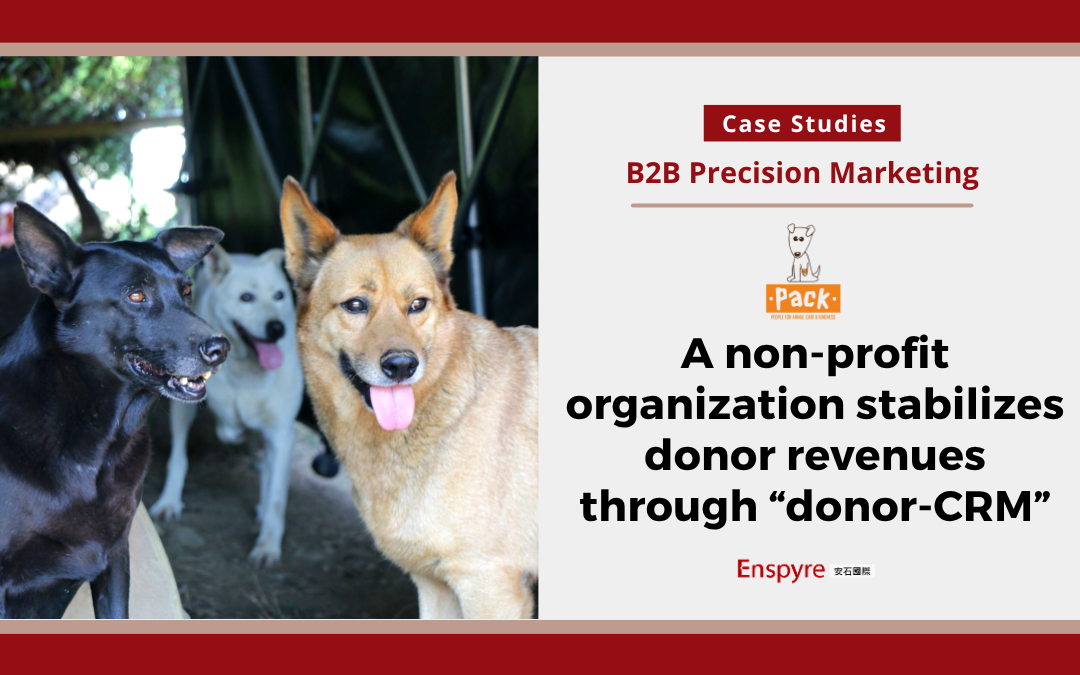
Image source: The PACK Sanctuary Taiwan
The PACK Sanctuary Taiwan
is a shelter organization located in Sanzhi, founded in 2017. It currently cares for hundreds of injured and elderly dogs and promotes adoption and foster programs both domestically and internationally.
“In Sweden, I almost never saw stray dogs. It wasn’t until I came to Taiwan that I realized how serious the stray animal problem is here. Twenty years ago, I started volunteering and donating to dog shelters, and The PACK was one of them. Before 2017, The PACK hoped to develop a long-term marketing strategy, and my partners and I gladly took on the task.”
Enspyre
CEO Elias Ek said.
Like businesses, nonprofit organizations need stable income to sustain operations and cover expenses (staff, rent, utilities, care costs, etc.). Although many animal lovers follow The PACK, the number of actual donors is far lower than the number of followers, and a high proportion of past donors made only one-time donations. This means that the biggest challenge in sustaining operations is effective Donor Relationship Management (DRM).
Donor Relationship Management is, simply put, about strengthening interaction and connection between donors and organizations to build long-term, stable relationships. In this article, we will share how
Enspyre
leveraged its years of experience assisting major IT companies with
lead generation services
to help The PACK turn one-time donors into returning supporters.
Enspyre’s Marketing Strategy
Reaching new donors while not forgetting old friends
Many nonprofit organizations use diverse marketing channels—such as street fundraising, events, and advertising—to find new donors and supporters of their mission. However, according to a report by the
Association of Fundraising Professionals
,
the average retention rate for new donors is only 23%. In other words, out of 100 new donors, 77 will lapse and become one-time donors.
Moreover, acquiring new donors costs 4 to 7 times more than encouraging existing donors to give again. Similar to business marketing, convincing new prospects to buy takes far more time and money than encouraging repeat purchases from existing customers, because existing supporters already have a level of familiarity and trust.
While attracting new supporters is essential for spreading awareness and gaining attention for nonprofit causes, proactively caring for existing donors—finding the right communication methods, frequency, and channels to build long-term relationships and improve retention—creates a more stable operational foundation.
Therefore, to increase donor retention and re-engage past supporters, Enspyre designed a two-step Donor Relationship Management (DRM) strategy to bridge the gap between nonprofits and donors.
Two steps to build closer relationships and manage two-way engagement between nonprofits and donors
Step 1: Understand donor backgrounds and motivations
The first step in donor relationship management is understanding donors. Analyzing donor backgrounds and motivations helps nonprofits plan appropriate communication content.
To study donor backgrounds, Enspyre leveraged nearly 20 years of B2B telemarketing expertise and conducted proactive donor care calls. Direct, human-to-human conversations reveal deeper and more authentic donor needs.
Compared to online surveys, phone outreach generates more reliable and effective data. This allows for clear donor personas and better design of donation channels and marketing content.
Step 2: Start with content and adjust communication methods
Based on insights gathered from donor care calls, Enspyre adjusted communication channels, frequency, and content.
First, Enspyre increased exposure across key channels based on donor habits. Precise multi-channel communication helps reach supporters missed by algorithms, reduces donor attrition, and increases visibility and support for fundraising projects.
Additionally, according to interviews conducted by
NPOst
and donor feedback from The PACK, donors care most about whether their contributions truly help solve social problems. Compared to one-way fundraising messages, providing positive post-donation feedback creates warmer, two-way engagement.
As a result, Enspyre recommended increasing donor interaction frequency and incorporating project progress updates, helping donors see how their contributions directly improve the lives of stray animals. This aligns with the “positive reinforcement” concept in behavioral psychology—positive feedback increases the likelihood of repeat donations and strengthens the bond between organizations and supporters.
Execution Results
Carefully managing donor relationships turns long-term supporters into stable contributors
After years of effort, The PACK achieved steady monthly donation growth, largely due to effective donor relationship management. During donor care calls, many donors expressed appreciation for The PACK’s thoughtfulness (as they rarely receive thank-you calls), which increased their engagement and willingness to donate.
The PACK’s data reports also showed significant growth:
- The conversion rate from one-time donations to recurring donations increased by 230% within one year
- Emails with project updates and adoption success stories achieved open rates about three times higher than regular emails
- Total annual donations increased by 2.7 times
Overall, DRM helped nonprofits re-engage many lapsed first-time donors. Continuous two-way interaction allows organizations to better understand donor needs while helping supporters build trust and familiarity with the organization.
Enspyre’s Long-Term Impact Evaluation
The PACK’s case shows that donor relationship management centers on the core mission of nonprofits: donors and organizations are partners. Donors provide funding, organizations take action, and together they aim to solve issues they care about and make society better. Regularly understanding donor needs and sharing upd